Coding for 11-Year-Olds: The 2026 Guide to the Pre-Teen Coding Sweet Spot
Age 11 is the pre-teen coding sweet spot — kids are ready for real text-based languages but still learn best through games and projects. Here is the complete 2026 guide to languages, milestones, screen time, and pricing.
In This Article
- 1What Is the Best Way for an 11-Year-Old to Start Coding?
- 2Why Age 11 Is the Pre-Teen Coding Sweet Spot
- 3The Best Programming Languages for 11-Year-Olds
- 45 Intermediate Scratch Game Ideas for 11-Year-Olds
- 5Coding Milestones for Ages 8-12
- 6A 4-Week Starter Plan, Screen Time, and Pricing
- ?Frequently Asked Questions
What Is the Best Way for an 11-Year-Old to Start Coding?
Start an 11-year-old with Python on a COPPA-compliant platform that offers guided AI help, structured lessons, and 20-30 minutes of daily practice. Within four weeks, most 11-year-olds can build and publish a real game or website they can share with family.
That is the short answer. The rest of this guide explains why age 11 is the pre-teen coding sweet spot, which languages to choose, the milestones to expect from ages 8-12, a 4-week starter plan, and how costs compare to coding camps and tutors.
Why Age 11 Is the Pre-Teen Coding Sweet Spot
Developmental psychologists have long identified ages 11-12 as the start of the formal operational stage — the moment children begin to think abstractly, reason hypothetically, and plan multi-step projects. That is exactly the cognitive toolkit text-based programming requires.
MIT Media Lab research on creative learning has found that children around age 11 make a decisive shift: they move from consuming technology to wanting to create with it. As Mitchel Resnick, professor of learning research and head of the Lifelong Kindergarten group at the MIT Media Lab, puts it: "The best way to help young people become creative thinkers is to give them opportunities to design, create, and invent."
The data backs up the timing:
- •Code.org advocacy data shows students who study computer science in middle school are far more likely to take computer science in high school — in some analyses, up to 6 times more likely.
- •The Bureau of Labor Statistics projects software development jobs to grow about 25 percent between 2022 and 2032 — much faster than the average for all occupations.
- •A 2024 Gallup survey found that 90 percent of parents want their child to learn computer science, yet many middle schools still do not require it.
- •A Common Sense Media census found that tweens ages 8-12 average nearly five hours per day of entertainment screen media — time that even a small daily coding habit can redirect from consumption toward creation.
Eleven-year-olds are also socially motivated coders. They want to publish, share, and get feedback from peers. That is why a platform with a shared projects gallery matters at this age — the audience is the motivation.
Gamification still matters at 11. The pre-teen brain responds strongly to visible progress — XP, badges, streaks, and published work. The best platforms wrap a real curriculum in game mechanics so the child chases the next badge and absorbs the next concept almost incidentally. Pure-play seriousness backfires at this age just as surely as pure-play entertainment does.
Middle school schedules make age 11 practical too. Sixth graders typically carry lighter homework loads than they will in 7th and 8th grade, and coding habits formed now — three or four short sessions a week — survive the transition to harder academic years far better than habits attempted during them.
Finally, age 11 sits squarely inside the window the CSTA K-12 Computer Science Standards define as Level 2 (grades 6-8), where students are expected to write real programs, use variables and control structures, and debug systematically. An 11-year-old who starts now is not early and not late — they are exactly on time.
The Best Programming Languages for 11-Year-Olds
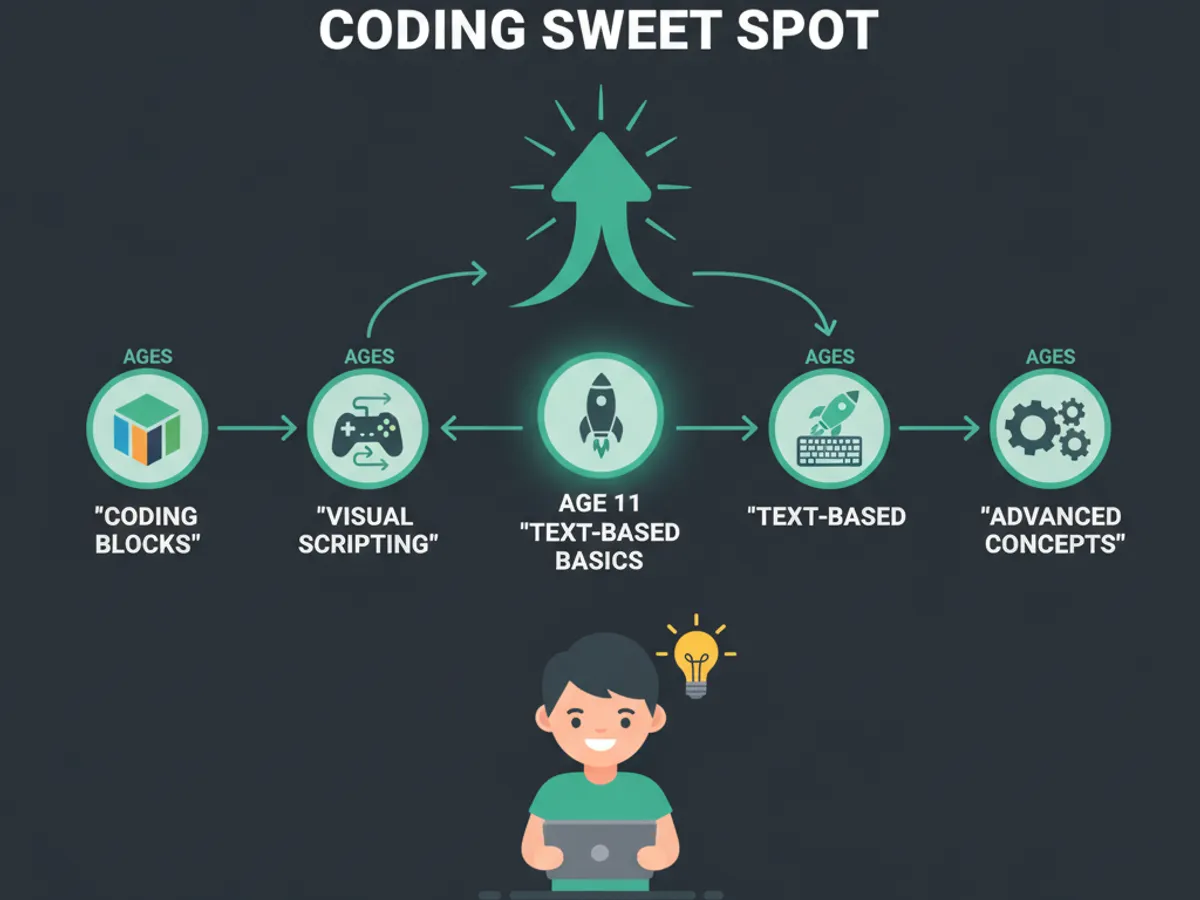
Eleven is the transition year: most kids this age can handle text-based code but still benefit from visual, gamified feedback. Here is how the main options compare.
| Language | Best For | Difficulty at Age 11 | First Real Project |
|---|---|---|---|
| Python | First text-based language; games, data, AI | Easy | Text adventure game |
| JavaScript | Interactive websites and browser games | Medium | Clicker game |
| HTML/CSS | Personal web pages and portfolios | Easy | Personal homepage |
| Scratch (intermediate) | Bridging from blocks to text | Easy | Tower defense game |
Our recommendation: Start with Python. Its syntax reads almost like English, error messages are friendly, and it is the language of AI and data science — the fields an 11-year-old in 2026 will grow up inside. Add HTML/CSS within the first month so the child can publish real web pages, then introduce JavaScript once Python basics click.
Avoid jumping straight to Java or C++. Both bury beginners under boilerplate code. And avoid staying in block-only tools too long: platforms that offer nothing but blocks start to feel babyish to an 11-year-old, which is one of the top reasons kids this age quit coding.
A good coding subscription gift bundles all of these paths into one account, so the child can move between Python, web projects, and games without switching platforms or losing progress.
What if the child resists text code? Start with a project, not a language. An 11-year-old who will not sit through a Python lesson will happily learn Python if the goal is making a game for friends. Frame every new concept as the missing piece of something the child already wants to build — the motivation problem usually dissolves on its own.
5 Intermediate Scratch Game Ideas for 11-Year-Olds
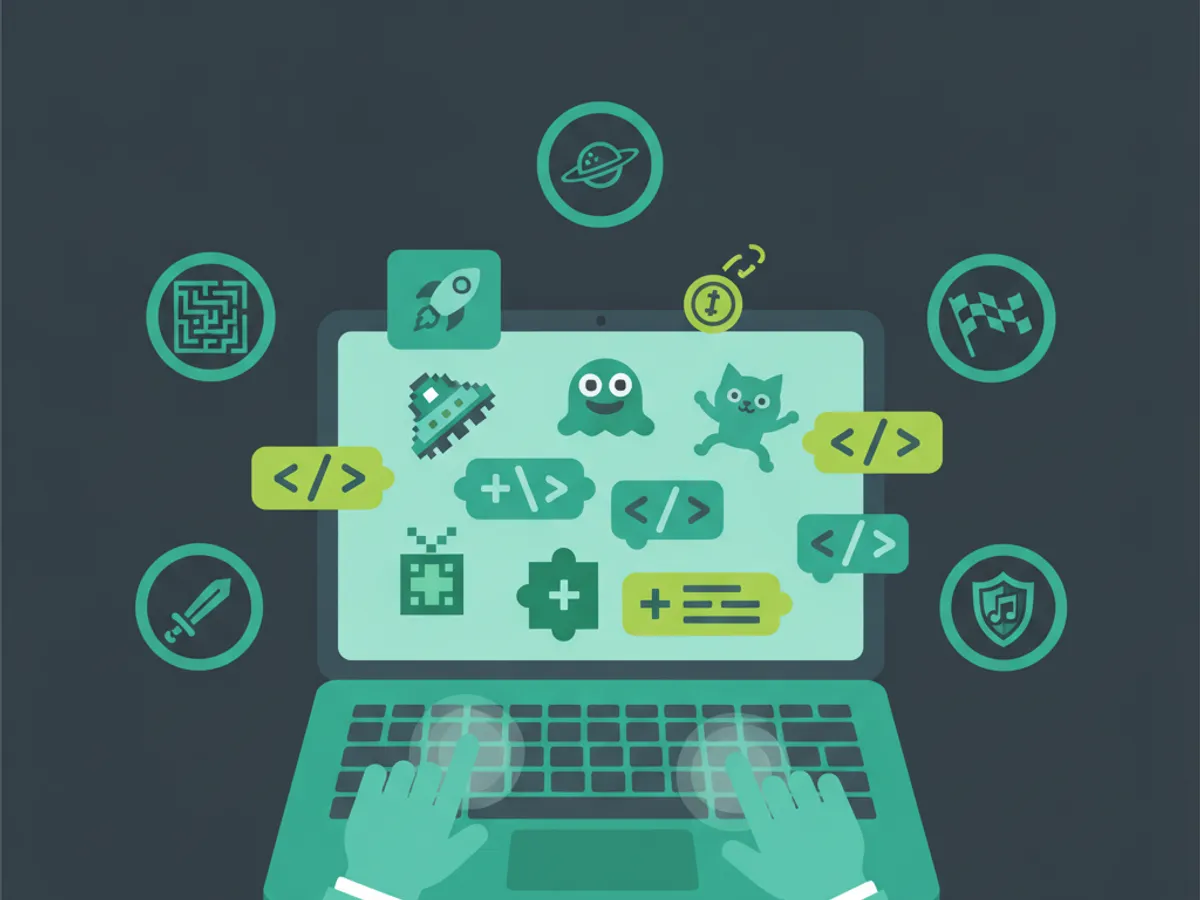
Many 11-year-olds still love Scratch, and search interest in scratch game ideas intermediate learners can build has grown steadily. Intermediate Scratch is a legitimate bridge to text coding — the logic is identical, only the keyboard changes. Five projects that genuinely stretch an 11-year-old:
- •Multi-level platformer. Scrolling backgrounds, level-tracking variables, and rising difficulty teach state management and game loops.
- •Tower defense. Placing towers against waves of enemies introduces lists, timed events, and resource management.
- •Quiz game with a question bank. Pulling questions from a list mirrors how real apps use databases.
- •Ecosystem simulation. Animals that eat, reproduce, and disappear based on rules introduce emergent behavior — the same systems thinking behind AI models.
- •Two-player battle game. Separate key controls for each player teach parallel event handling and game balance.
The signal to move on to text code: when the child starts complaining that Scratch cannot do something — real online multiplayer, saving progress to an account, typing actual code — they are ready for Python. Children pushed to text code too early quit from frustration; children held in blocks too long quit from boredom. Guided platforms find the middle path.
One pattern bears repeating: 11-year-olds who publish their games treat feedback like a scoreboard. Comments and remixes from other kids drive revision cycles that no adult instruction can match — the child voluntarily reopens a finished project to make it better.
For project inspiration, browse the shared projects gallery, where kids publish finished games and remix the work of other young builders.
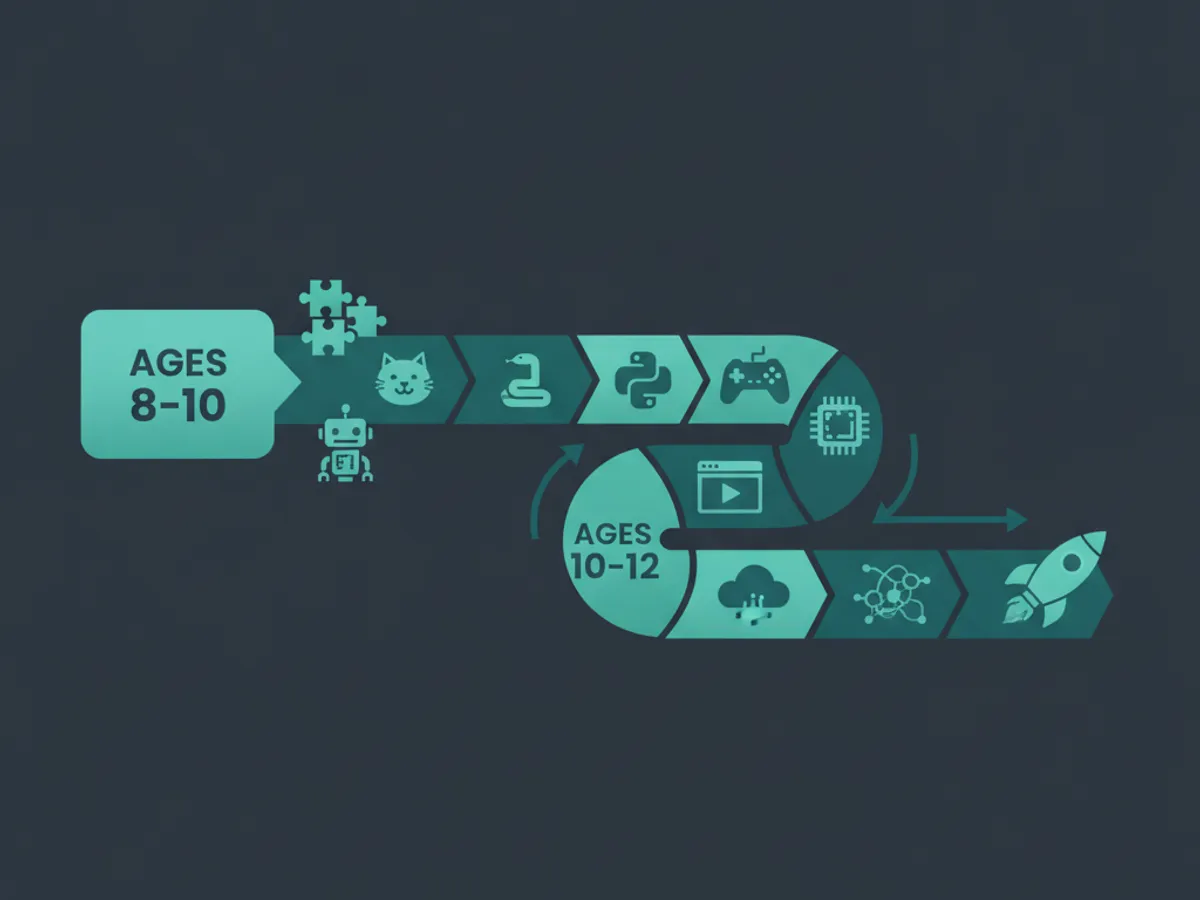
Coding Milestones for Ages 8-12
Parents often search for coding milestones for 8-10 year olds and then wonder where an 11-year-old fits. This table combines the CSTA K-12 Computer Science Standards progressions with patterns observed across thousands of young learners.
| Age | Typical Coding Milestones | Ready for the Next Step When... |
|---|---|---|
| 8 | Builds multi-sprite Scratch stories; uses sequences and simple loops | The child can explain what each block does |
| 9 | Uses variables and conditionals; remixes projects; predicts program output | The child debugs without giving up |
| 10 | Builds intermediate Scratch games; types first HTML tags; understands coordinates | The child asks for real code |
| 11 | Writes Python programs with variables, loops, and functions; debugs independently; publishes a first project | The child plans a multi-week build |
| 12 | Builds and deploys websites; combines languages in one project; maintains a portfolio | The child can teach a concept to someone else |
Two cautions about milestones. First, they are ranges, not deadlines — a motivated 9-year-old can reach the age-11 row, and a brand-new 12-year-old starts at the top of the table. Second, completion beats coverage: one finished, published project teaches more than five half-finished tutorials. Track milestones by what the child can build and explain, not by hours logged.
If the child is ahead of the table, resist accelerating the curriculum — deepen it instead. A second project at the same level builds more durable skill than a rushed jump to the next. If the child is behind, check the basics first: reading fluency and typing speed account for most stalled progress at this age, and both resolve quickly with practice.
A 4-Week Starter Plan, Screen Time, and Pricing
The 4-week starter plan for an 11-year-old:
- •Week 1 — Foundations (20-30 min/day). First Python program: print statements, variables, and user input. Goal: a program that asks questions and responds.
- •Week 2 — Logic (20-30 min/day). Conditionals and loops. Goal: a number-guessing game that keeps score.
- •Week 3 — Build (30-45 min/day). Start a personal project — a text adventure, quiz app, or simple webpage. Goal: a working draft.
- •Week 4 — Ship (30-45 min/day). Finish, polish, and publish to the shared projects gallery. Goal: a link the child can text to grandparents.
Signs the plan is working: the child talks about the project at dinner, asks for extra sessions, and starts customizing beyond the lesson instructions. If none of those happen by week three, switch project topics before switching platforms — interest, not aptitude, is usually the bottleneck.
Screen time. Not all screen time is equal. The American Academy of Pediatrics distinguishes between passive consumption and active creation, and Common Sense Media screen time guidance places coding in the high-quality category. Dr. Jenny Radesky, a developmental-behavioral pediatrician and lead author of the AAP media guidelines, frames it this way: the content and context of media use matter more than raw minutes. A focused 30-minute coding session is not the same as 30 minutes of short videos. Cap sessions at 45 minutes with movement breaks, and keep devices out of bedrooms overnight.
Pricing. Parents frequently ask: what are the pricing options for coding camps available this summer? Here is the honest comparison for 2026:
| Learning Option | Typical Cost | Time to First Project | COPPA-Safe | Builds Portfolio |
|---|---|---|---|---|
| KidsCode Gift (annual) | $99.99/year | Day 1 | Yes | Yes |
| KidsCode Gift (monthly) | $9.99/month | Day 1 | Yes | Yes |
| Summer coding camp | $300-$1,500 per week | Week 1 | Varies | Rarely |
| Private coding tutor | $40-$100 per hour | Session 1 | N/A | No |
| Free video tutorials | Free | Varies | No | No |
A full year of guided coding costs less than a single week at many camps — and unlike a camp, it does not end in August. Camps work well as a spark: one intensive week can ignite real interest. But research on skill retention consistently shows spaced practice beats cramming, which is why the year-round model wins on cost per skill actually gained. Compare all plans on the pricing page, or browse gift packs if you are buying for a birthday or holiday. For a younger sibling, our coding for 10-year-olds guide covers the earlier milestones. Online chess classes for kids also pair well with coding — chess builds the strategic patience that debugging demands.
Frequently Asked Questions
What is the best coding language for an 11-year-old?
Can an 11-year-old learn coding without a class or tutor?
How much does it cost to teach an 11-year-old to code?
Is Scratch or Python better for an 11-year-old?
What coding milestones should an 11-year-old reach?
Free: First 10 Coding Projects for Kids (PDF)
A printable starter pack — real projects your child can build this weekend. No spam, unsubscribe anytime.
Start Your Child's Coding Journey Today
Two full courses free. No credit card required. AI-assisted learning for ages 7–16.
Get Started Free