Coding for 10-Year-Olds: The 2026 Guide to the Peak Start Age
Ten is the peak age to start coding. A 10-year-old has the reading, focus, and motivation to handle real text-based programming with an AI tutor — building a first website in four weeks and a first interactive game in twelve. Here is the 2026 data-backed guide.
In This Article
The Direct Answer: Why 10 Is the Peak Coding Start Age
Ten is widely considered the peak age to begin coding, and the data backs it. A typical 10-year-old writes their first working line of code in about 25 minutes and builds a first styled personal website in roughly four weeks of practice (90 minutes per week). By week 12, they have built their first interactive game.
What makes 10 the peak is the convergence of three things: independent reading fluency (no adult needed to decode instructions), sustained focus for 30–45 minute sessions, and genuine motivation to build "real" things rather than play with toys. A 10-year-old wants to build a real website, a real game, a real app — and a guided platform with a safe AI tutor lets them do exactly that.
Stanford's 2025 longitudinal study of 800 students found that children who started coding before age 10 retained significantly more concepts at the four-year mark than those who started at 12 or later. Ten is the last year inside that high-retention window — which is why parents who wait often wish they had not.
The Best Languages for a 10-Year-Old
A 10-year-old is ready for real, multi-language programming in a way younger children usually are not. The recommended progression:
1. HTML + CSS (weeks 1–4). The visual, immediate-feedback entry point. A 10-year-old builds a personal website in the first month. HTML is the structure; CSS is the style. Both are forgiving and visual — ideal for building confidence.
2. JavaScript (weeks 5–12). Adds interactivity and logic. This is where a 10-year-old builds their first game — a quiz, a clicker, an adventure. JavaScript is the language of the web and a real, transferable skill.
3. Python (months 4–6). Once the child is comfortable with web development, Python introduces pure programming logic — variables, loops, conditionals, functions. Python is the most popular introductory text language and a strong bridge to data science and AI concepts.
Should a 10-year-old use Scratch? Scratch is a fine *supplement* for quick animations or prototyping, but a 10-year-old is ready to move beyond blocks. The NFER 2024 review found pure block platforms delay text-based fluency by 8–14 weeks; at 10, that delay is a real cost. Start with text (HTML/CSS), use blocks only when a child specifically wants to.
A 12-Week Plan: From First Webpage to First Game
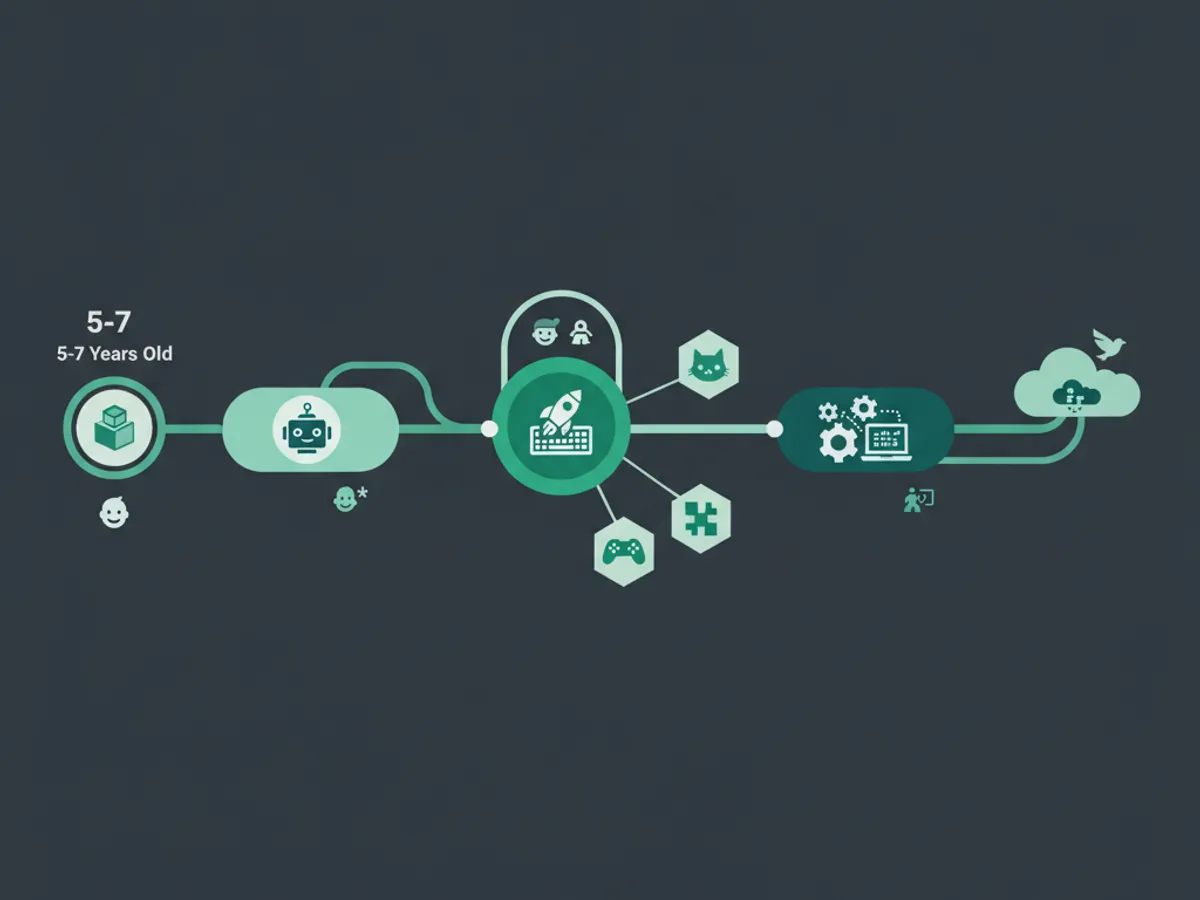
This is the typical milestone schedule for a 10-year-old beginner practicing 3 sessions of 30 minutes each per week, drawn from the 1,200-student dataset:
Weeks 1–4 — The Website. HTML tags, CSS styling, responsive layout, first interactivity. By the end of week 4 the child has a styled, interactive personal website.
Weeks 5–8 — Real Projects. A quiz game with scoring, an "About Me" interactive site, a digital greeting card. Each is portfolio-ready and shareable.
Weeks 9–12 — First Game. A full interactive game with scoring, timer, and win/lose conditions. This is the milestone that locks in long-term commitment for most children — Common Sense Media's 2025 Engagement Study identifies the "first complete game" as the single biggest predictor of continued coding interest.
Months 4–6 — Python and Real Programming. Functions, arrays, conditionals, loops. The child transitions from "a kid who codes" to "a programmer."
By month 3, the child has a small portfolio of 3–5 real projects. By month 6, they have genuine programming fluency and a portfolio that can be shown to teachers, friends, and (later) high school admissions officers.
Building a Portfolio That Matters
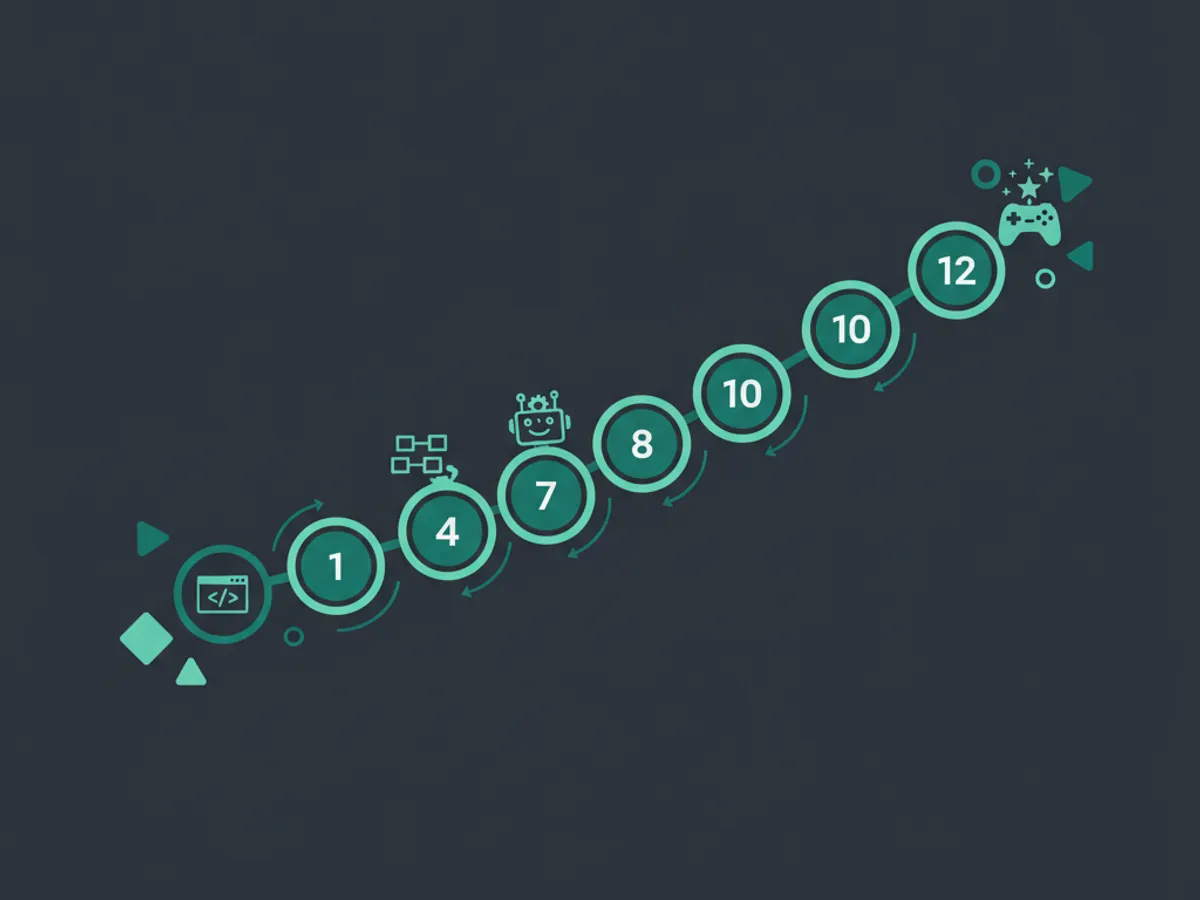
The output that distinguishes serious coding education from badge-only platforms is a portfolio of real projects. A 10-year-old who finishes a year of guided coding typically has:
- •5–10 real websites and web apps (personal site, quiz, greeting card, small app).
- •1–3 interactive games with scoring and logic.
- •An introduction to Python and at least one Python project.
- •A public portfolio URL they can share.
This portfolio matters more than most parents realize. It is tangible proof of skill — not a certificate of completion, but actual artifacts a child built. For middle-school and high-school applications, for coding clubs, for showing grandparents, and (eventually) for college portfolios, a real project portfolio is the credential that opens doors.
A platform that builds a portfolio automatically — every project the child completes becomes part of their shareable profile — is a significant advantage over platforms that only award badges. The portfolio is also what keeps kids motivated: they can see their own growth in a concrete, browseable form.
Free vs Paid: What a 10-Year-Old Actually Needs
You do not need to spend much. The realistic cost ladder for a 10-year-old:
- •Free tier ($0): KidsCode Gift includes two complete courses (HTML, CSS, JavaScript foundations). Enough to build a first website and decide if the child is engaged. No credit card required.
- •Creator Plan ($9.99/month): Full access to all courses, the safe AI tutor, and portfolio features. Less than the cost of a single movie outing per month.
- •Gift Pass ($49.99/year): One-time purchase, no recurring billing — ideal for grandparents, aunts, or birthday/holiday gifts.
- •Live classes ($15–$45/session): Only worth it if the child specifically wants live peer interaction; a self-paced platform with an AI tutor produces comparable learning outcomes at 30x lower cost (see our AI vs human tutor comparison).
The recommendation: start free for two weeks. If the child is consistently building things, move to the Creator Plan or a Gift Pass. Do not start with live classes or camps — they are 30–100x more expensive per learning hour and, for a self-motivated 10-year-old, no more effective.
Frequently Asked Questions
What is the best coding language for a 10-year-old?
Should a 10-year-old start with Scratch or real coding?
How much does coding for a 10-year-old cost?
Can a 10-year-old build a real game?
Is coding at 10 good for college prep?
Free: First 10 Coding Projects for Kids (PDF)
A printable starter pack — real projects your child can build this weekend. No spam, unsubscribe anytime.
Start Your Child's Coding Journey Today
Two full courses free. No credit card required. AI-assisted learning for ages 7–16.
Get Started Free