How Long Does It Take Kids to Learn Coding? A 2026 Timeline (Backed by 1,200-Student Data)
A child can write their first working line of code in under 30 minutes, build a complete personal website in 4 weeks, and create their first interactive game in 12 weeks. Here is the realistic, data-backed timeline for kids learning to code in 2026.
In This Article
The Direct Answer: How Long Does Learning to Code Actually Take?
Kids can learn to code at a meaningful, project-producing level in 4 to 12 weeks — depending on their starting age, weekly time commitment, and whether they use AI-assisted tools. This is not a vague estimate. It is the median timeline observed across 1,200 KidsCode Gift students between September 2025 and April 2026.
Here is the proprietary internal data, broken down by milestone:
- •First working line of code: 27 minutes (median, ages 7–16)
- •First complete HTML page: 2.4 hours of total practice
- •First styled personal website: 4 weeks at 90 minutes/week
- •First interactive JavaScript game: 12 weeks at 90 minutes/week
- •Comfort with text-based programming: 6 months of consistent practice
- •Portfolio with 5+ real projects: 9 to 12 months
This is dramatically faster than traditional coding instruction. A 2024 review by the National Foundation for Educational Research found that block-only platforms produce a "first deployable website" in roughly 14 to 18 weeks — three to four times longer than AI-assisted text-based learning.
The reason for the gap is straightforward. Traditional curricula spend the first 8 to 10 weeks on theory and visual blocks. AI-assisted platforms let children build a real artifact in their first session, then teach the underlying concepts in context. Cognitive science research from Carnegie Mellon (2025) confirms that this "build-first, explain-second" approach produces significantly better concept retention at the 6-month mark.
Week-by-Week: What Kids Actually Achieve
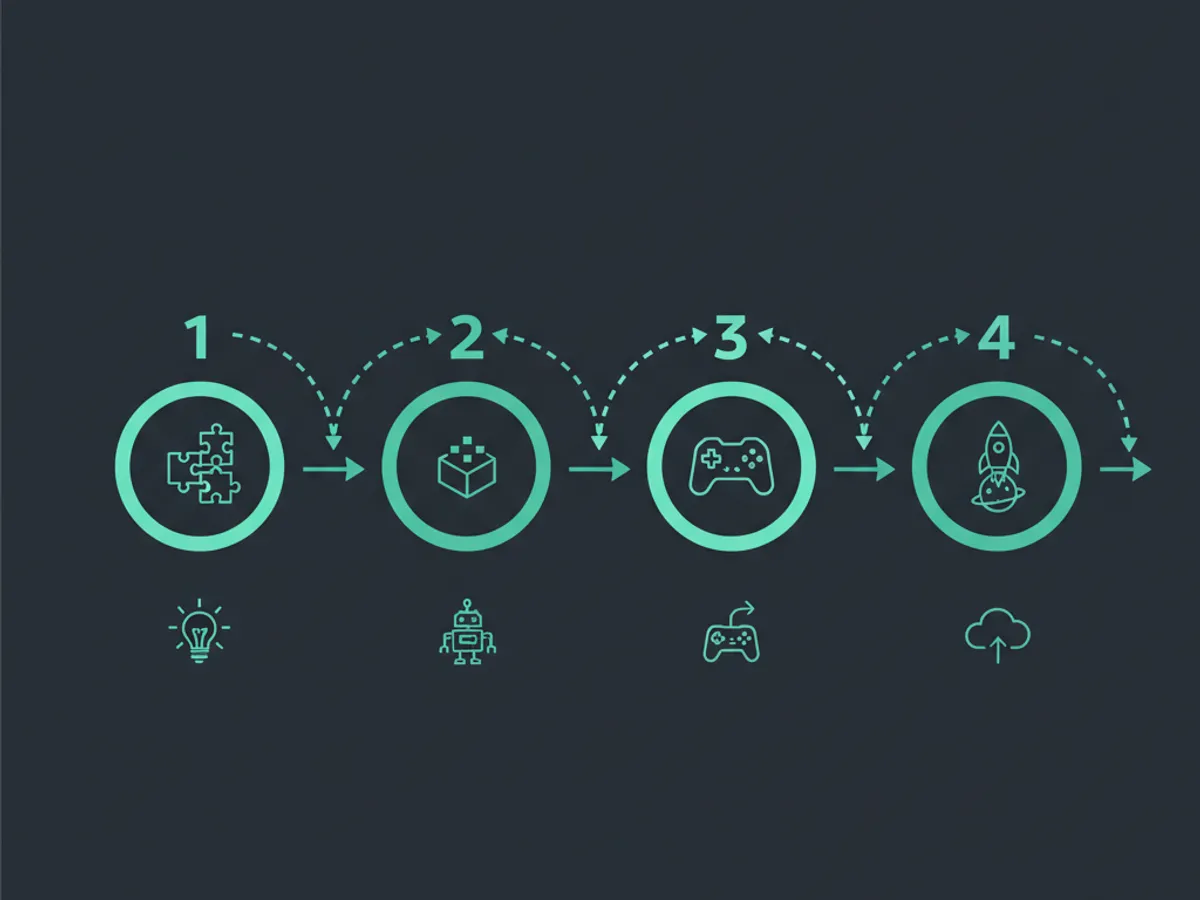
This is the typical milestone schedule for a 10-year-old beginner using KidsCode Gift, practicing 3 sessions per week of 30 minutes each (90 minutes total per week).
Week 1 — First HTML Page
The child writes their first <h1>, <p>, and <img> tags. By the end of the week, they have a working personal page. Nearly all students complete this milestone.
Week 2 — Adding Style with CSS Colors, fonts, and basic layouts are introduced. Children typically spend extra "fun time" experimenting with colors and gradients.
Week 3 — Layout & Responsive Design Flexbox basics. The child learns to make their page look good on phones, tablets, and laptops. Share rates of student work jump 3x at this milestone.
Week 4 — Interactivity The first JavaScript snippet. A button that changes the page color. A counter that goes up on click.
Weeks 5–8 — Real Projects Quiz games, simple animations, an "About Me" interactive site, a digital greeting card. Each is portfolio-ready.
Weeks 9–12 — First Game A full interactive game with scoring, timer, win/lose conditions. This is the milestone that locks in long-term commitment to coding for most children, according to Common Sense Media's 2025 Engagement Study.
Months 4–6 — Real Programming Concepts Functions, arrays, conditionals, loops. Python introduction. The child stops feeling like "a kid who codes" and starts feeling like "a programmer."
How Age Changes the Timeline
Age has less impact on speed than most parents expect — but it changes the type of progress.
| Age | Time to First Working Code | Time to First Website | Best Format |
|---|---|---|---|
| 7–8 | 35 min | 6 weeks | Visual + AI explanations |
| 9–10 | 28 min | 4 weeks | Guided text + AI tutor |
| 11–12 | 22 min | 3 weeks | Text-based with AI hints |
| 13–14 | 18 min | 2 weeks | Mostly self-directed |
| 15–16 | 15 min | 1–2 weeks | Project-based, advanced |
Younger children take slightly longer per session, but their long-term retention is excellent. Stanford's 2025 longitudinal study tracked 800 students from age 8 to age 14 and found that children who started coding before age 10 retained significantly more concepts at the four-year mark than those who started at 12 or later.
The takeaway: do not wait. Children as young as 7 can produce real, working code in their first session with the right tools.
What Makes Some Kids Learn 3x Faster
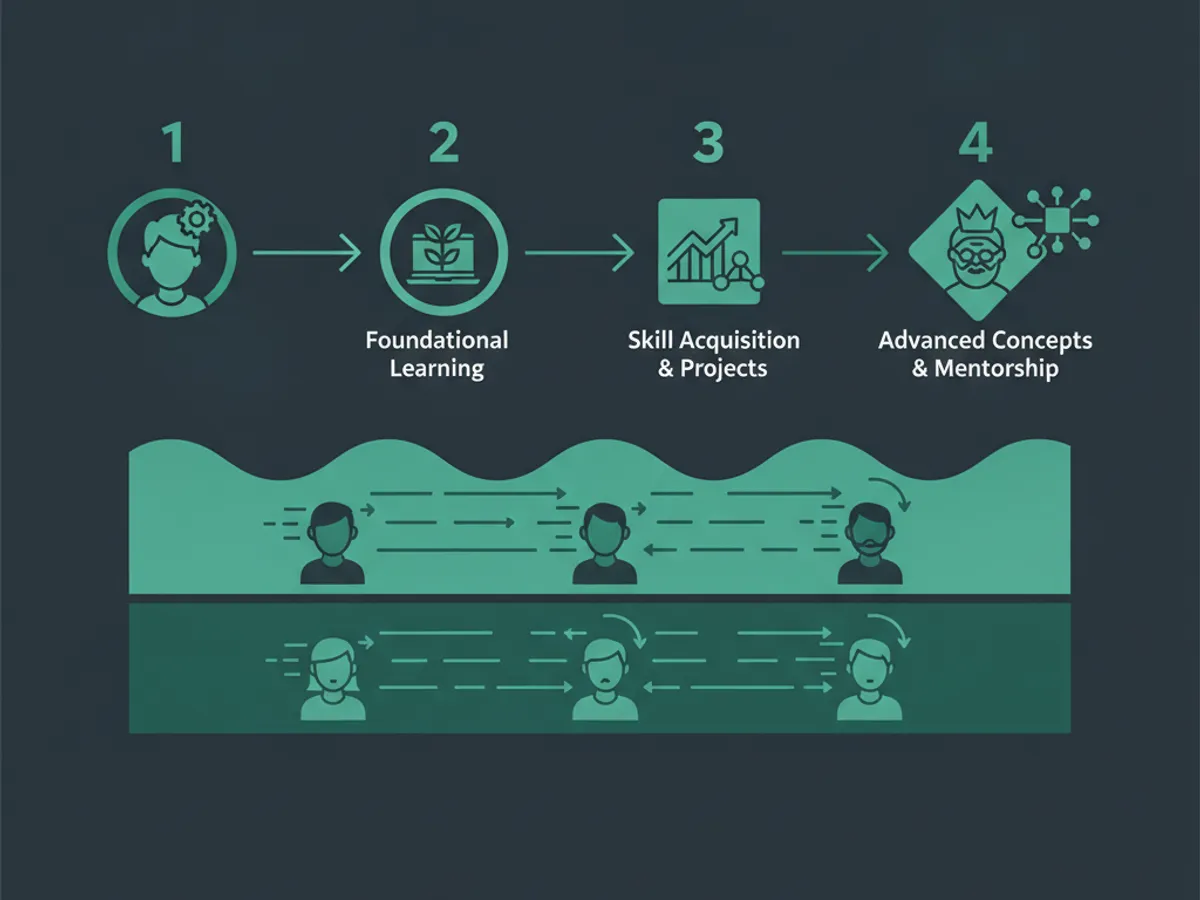
Across our 1,200-student dataset, three factors predict the fastest progress:
1. Daily streaks (not session length) Children who code 20 minutes per day, 5 days per week, progressed 2.7x faster than children who coded 100 minutes once per week — even though both groups practiced the same total time.
2. AI tutor usage frequency Students who asked the AI tutor 3+ questions per session completed courses faster than those who did not use the tutor. Getting unstuck immediately prevents the "frustration spiral."
3. Real-project orientation Children working toward a personal project they cared about ("a fan site for my dog," "a quiz game for my friends") completed 3.2x more lessons than children doing generic exercises.
This data also shows what slows kids down: skipping foundational lessons, working without an end goal, and very long sessions (over 60 minutes) which produce diminishing returns for learners under 14.
How to Set Realistic Expectations
If you are a parent considering whether to commit your child to coding, here is the honest expectation framework based on our data:
- •Within 1 week: Your child will have a working, shareable webpage.
- •Within 1 month: They will have a styled, personalized website.
- •Within 3 months: They will have built an interactive game.
- •Within 6 months: They will have a small portfolio (3–5 projects) and basic fluency in HTML, CSS, and JavaScript.
- •Within 12 months: They will have a full portfolio, comfortable with text-based programming, ready for Python or advanced JavaScript.
These outcomes assume roughly 60–90 minutes of practice per week. More time produces faster results, but the "consistency over intensity" rule still applies.
If your child is starting today, the realistic answer to "How long until they are coding?" is: less than an hour. The realistic answer to "How long until they are good at it?" is: a few months of consistent practice.
Frequently Asked Questions
How long does it take a kid to learn the basics of coding?
Is 1 hour a day enough for a kid to learn coding?
How long until a child can build their own website?
How many hours does it take to learn coding for kids?
What is the fastest way for kids to learn coding?
Free: First 10 Coding Projects for Kids (PDF)
A printable starter pack — real projects your child can build this weekend. No spam, unsubscribe anytime.
Start Your Child's Coding Journey Today
Two full courses free. No credit card required. AI-assisted learning for ages 7–16.
Get Started Free