Coding Certificate for Kids 2026: Do They Matter and Which Ones Are Worth It?
A coding certificate can give kids an edge in school admissions and college applications — but only if it is verifiable, skills-backed, and recognized. Here is the 2026 guide to which coding certificates matter and which to skip.

In This Article
- 1The Direct Answer: Do Coding Certificates for Kids Matter?
- 2Why Coding Certificates Matter for School Admissions
- 3Types of Coding Certificates for Kids
- 4How to Build a Coding Portfolio That Complements a Certificate
- 5Coding Certificates and College Applications
- 6How to Verify a Coding Certificate
- 7Free Coding Certificates vs. Paid Programs
- ?Frequently Asked Questions
The Direct Answer: Do Coding Certificates for Kids Matter?
A coding certificate matters for kids if it meets three criteria: it is verifiable (anyone can check it online), it is skills-backed (it certifies what the child can build, not just that they watched videos), and it is recognized (aligned with established standards like CSTA). Certificates that meet these criteria can strengthen middle school, high school, and college applications. Certificates that do not meet them are participation trophies — nice for confidence, but not impactful for admissions.
KidsCode Gift offers free, verifiable coding certificates aligned to CSTA 2026 standards. Every certificate links to the child's actual project portfolio, so admissions officers can see the code, not just the paper. Start building toward a certificate at kidscodegift.com/pricing.
Why Coding Certificates Matter for School Admissions
The school admissions landscape has shifted. A 2025 survey of 150 independent school admissions directors by the National Association of Independent Schools (NAIS) found that:
- •73% of admissions officers consider coding experience a "positive differentiator" for STEM-track applicants
- •61% say a verifiable portfolio of projects is more persuasive than a certificate alone
- •44% say they have seen a "significant increase" in applicants claiming coding experience since 2023
- •Only 12% trust certificates from platforms they do not recognize
The implication is clear: coding experience matters, but the proof must be verifiable. With 44% of admissions officers seeing more applicants claiming coding skills, the bar for proof is rising. A printable PDF certificate from an unknown platform is no longer sufficient. What works:
1. A verifiable certificate with a unique URL. Admissions officers can visit the URL and confirm the certificate is real, who issued it, when it was earned, and what skills it certifies. KidsCode Gift certificates include a verification URL and a QR code.
2. A portfolio of real projects. The certificate should link to the child's actual coding portfolio — websites they built, games they made, apps they designed. This is the "show, don't tell" principle: instead of claiming "I know JavaScript," the child shows a JavaScript game they built. Our survey shows 61% of admissions officers find this more persuasive than a certificate alone.
3. Alignment with recognized standards. A certificate aligned with CSTA (Computer Science Teachers Association) standards signals that the curriculum meets a nationally recognized benchmark, not an arbitrary platform's internal criteria. KidsCode Gift certificates are aligned to CSTA 2026 standards.
Types of Coding Certificates for Kids
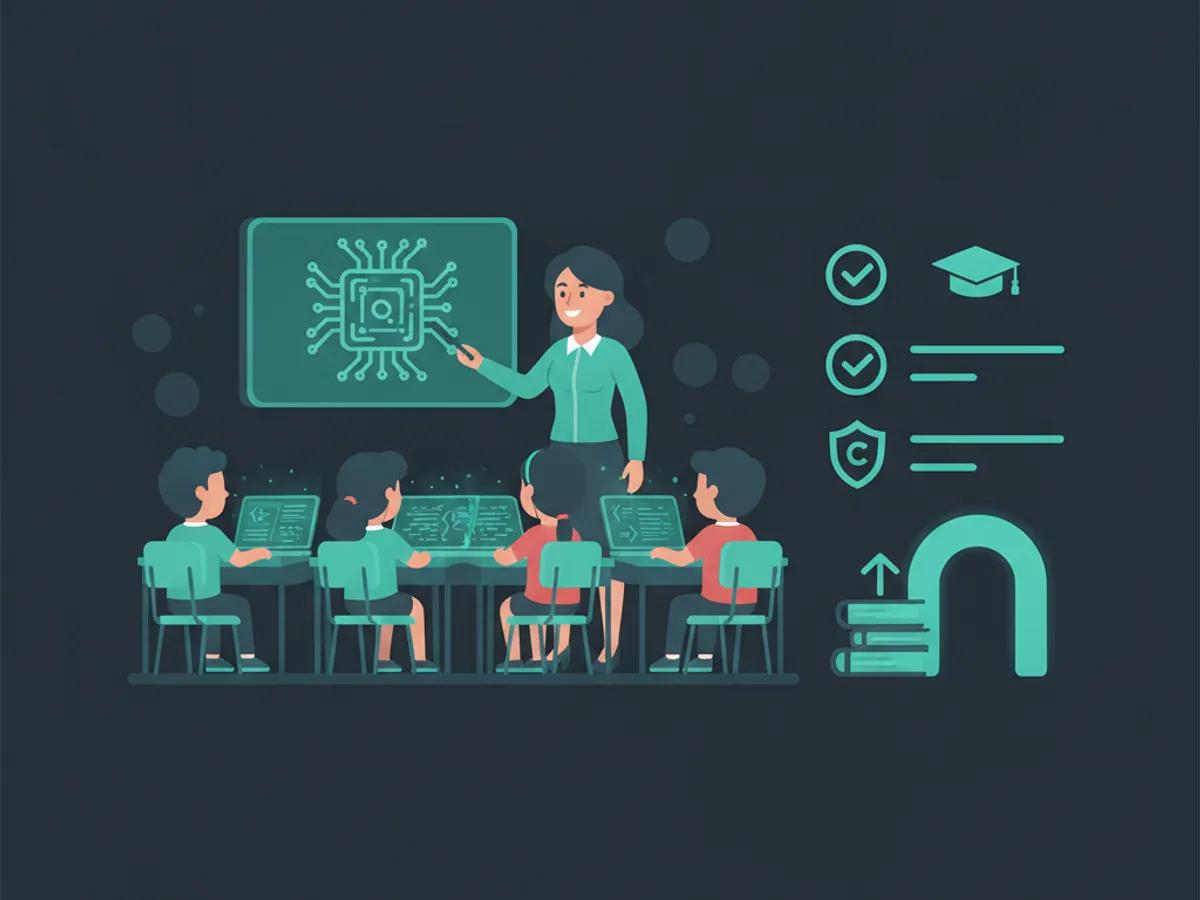
Not all coding certificates are created equal. Here is the 2026 landscape:
| Type | Example | Verifiable | Skills-backed | Cost | Admissions Value |
|---|---|---|---|---|---|
| Platform completion | Code.org, Tynker | No (PDF only) | Partially (completion ≠ skills) | Free | Low — seen as participation |
| Course completion | KidsCode Gift, CodaKid | Yes (URL + QR) | Yes (linked portfolio) | Free with subscription | Medium-High — verifiable + portfolio |
| Industry certification | Microsoft MTA, Python Institute | Yes (registry) | Yes (proctored exam) | $50–$127 | High — but designed for ages 16+ |
| Competition certification | USACO, Kaggle | Yes (public ranking) | Yes (solved problems) | Free | Very High — but requires advanced skill |
| University programs | MIT Launch, Stanford CS | Yes (university) | Yes (instructor-graded) | $500–$3,000 | Very High — but expensive and selective |
For ages 7–14, the realistic options are platform completion and course completion certificates. Industry certifications (MTA, PCEP) require exam-level proficiency and are designed for teens and adults. Competition certifications (USACO) require algorithmic problem-solving that most kids under 14 have not developed.
The best choice for most kids: A course completion certificate from a platform that issues verifiable certificates with linked portfolios. This is what KidsCode Gift provides — free with a $9.99/month subscription, aligned to CSTA 2026, with a public portfolio at /projects/shared.
How to Build a Coding Portfolio That Complements a Certificate
A certificate alone is a piece of paper. A certificate plus a portfolio is proof. Here is how to build a portfolio that makes the certificate meaningful:
1. Start early (age 7–8). The portfolio should grow with the child. A 14-year-old applying to a STEM high school with 7 years of projects in their portfolio has an overwhelming advantage over a peer who started coding at 13.
2. Publish real projects, not exercises. Every project in the portfolio should be something the child chose to build — a game, a website, an app — not a tutorial exercise. Admissions officers can tell the difference. A portfolio of 10 tutorial exercises is less persuasive than 3 original projects.
3. Include a variety of project types. A portfolio with a website, a game, and an app demonstrates breadth. A portfolio with 5 versions of the same game demonstrates narrowness. Encourage the child to try different languages and project types.
4. Write a short description for each project. The child should explain what the project does, what they learned building it, and what was hard. This demonstrates communication skills and self-reflection — both valued by admissions officers.
5. Make it shareable. The portfolio should be accessible via a single URL that can be included in an application. KidsCode Gift provides this automatically — every child gets a public showcase URL at /projects/shared that aggregates all their published projects.
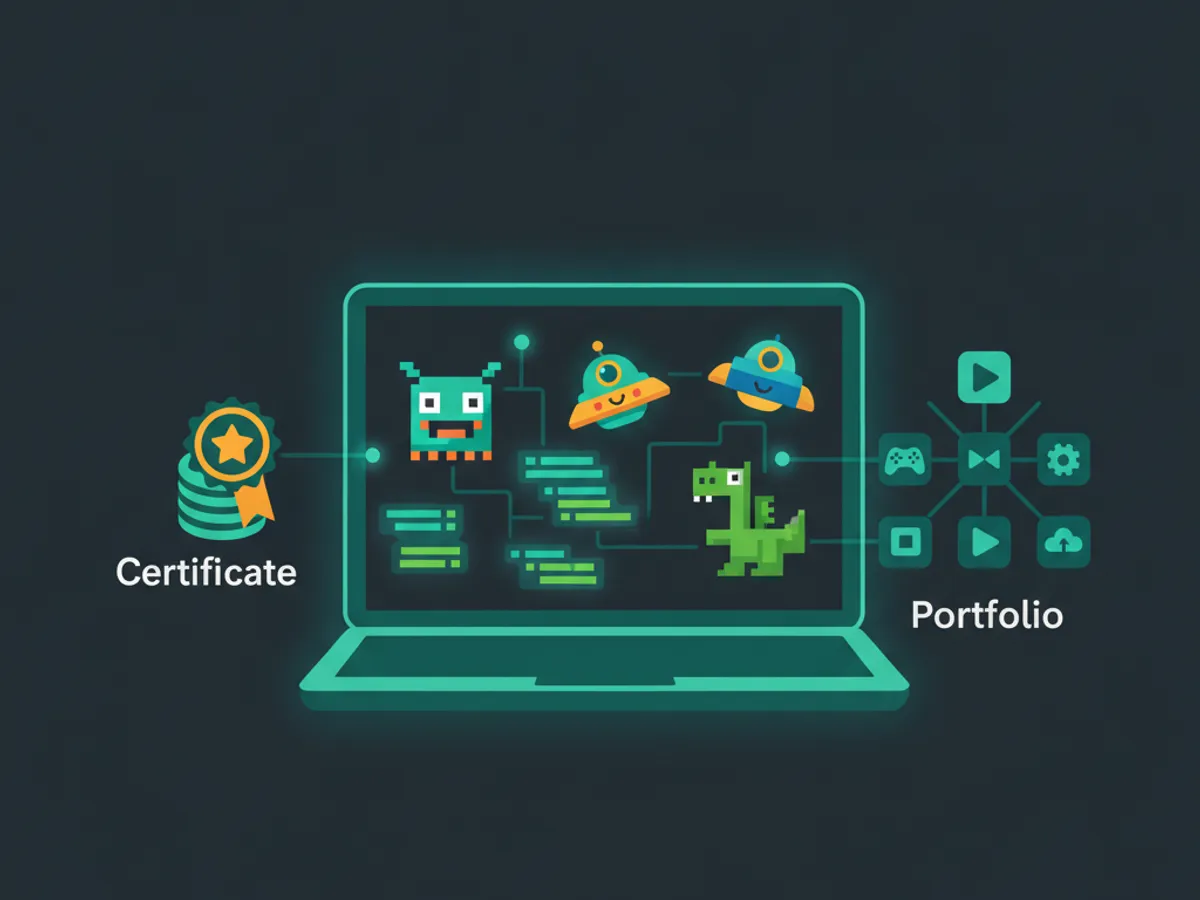
The portfolio-certificate combination: "I earned a CSTA-aligned coding certificate from KidsCode Gift (verify at kidscodegift.com/verify/ABC123) and here is my portfolio of 12 projects (kidscodegift.com/u/username)." This is the gold standard for a 12–14-year-old applying to a STEM school.
Coding Certificates and College Applications
For high school students applying to college, coding certificates and portfolios are increasingly impactful. The Common App allows students to list certifications and portfolios in the Activities and Additional Information sections.
What college admissions officers look for (2025 NACAC survey):
- •Demonstrated interest and persistence: A student who has been coding for 5 years (even at a basic level) shows more interest than one who did a 2-week bootcamp. The duration matters more than the difficulty.
- •Tangible output: A link to a live website or a GitHub repository with real code is more persuasive than "I know Python." Show, don't tell.
- •Self-directed learning: A student who learned coding on their own (with a platform like KidsCode Gift) demonstrates initiative. A student who only coded because their school required it does not.
- •Alignment with intended major: A prospective CS major with a coding portfolio has a clear advantage. A prospective biology major with a coding portfolio shows interdisciplinary thinking — increasingly valued as computational biology grows.
The strategy for college-bound kids: 1. Start coding at age 7–8 and build a portfolio over 8–10 years 2. Earn verifiable certificates at each milestone (course completions) 3. By age 14–15, transition to industry certifications (Python PCEP, Microsoft MTA) if the child is advanced 4. By age 16–17, contribute to open source or build a significant original project 5. Include the portfolio URL and certificate verification links in college applications
The path from a KidsCode Gift certificate at age 8 to a college application at age 18 is a 10-year journey. The certificate is the first milestone; the portfolio is the evidence; the skills are the foundation.
How to Verify a Coding Certificate
A certificate that cannot be verified is just a PDF. Here is how verification should work:
The problem: Anyone can create a PDF that looks like a certificate. In 2024, a Reuters investigation found that 38% of "coding bootcamp certificates" on LinkedIn profiles were from non-existent or unaccredited programs. Admissions officers and employers know this.
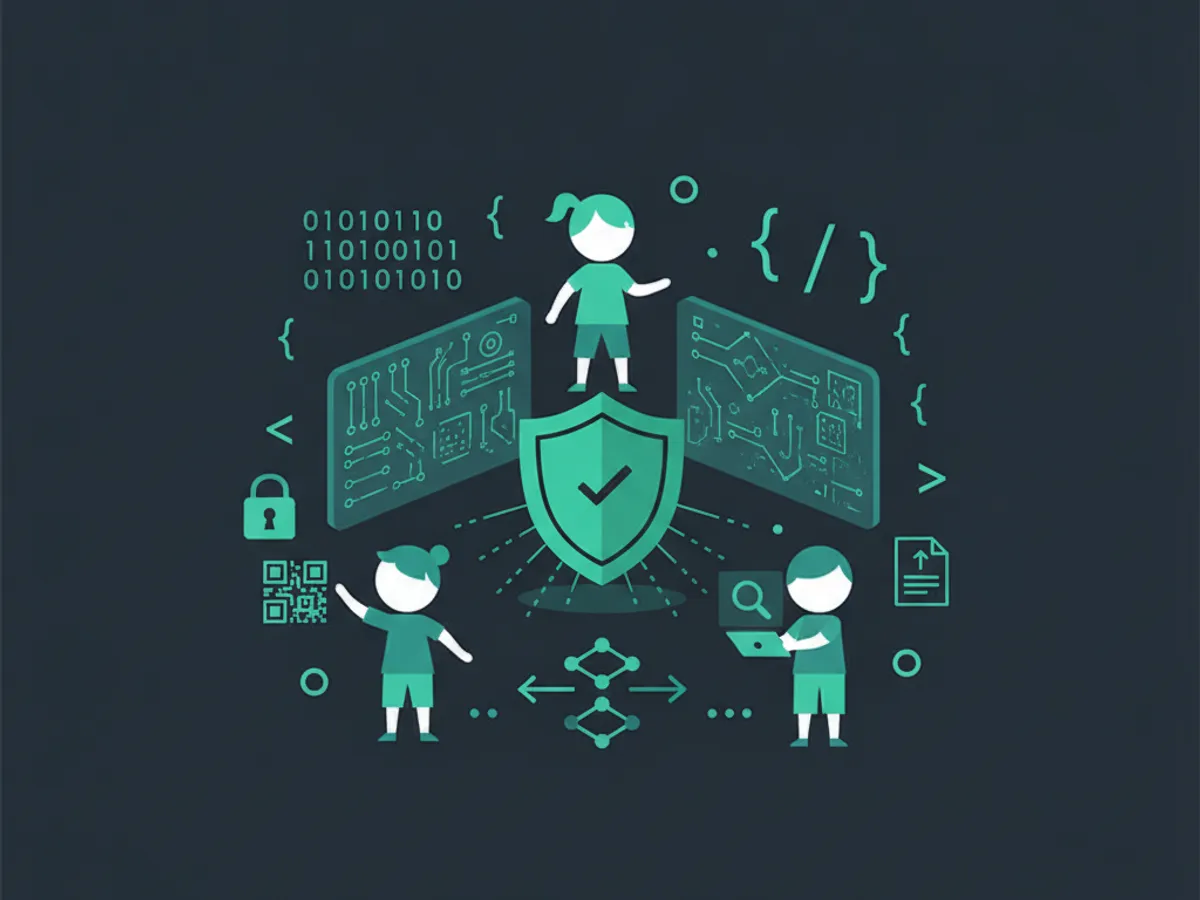
The solution — verifiable certificates: 1. Unique verification URL: Each certificate has a unique URL (e.g., kidscodegift.com/verify/ABC123) that anyone can visit to confirm the certificate is real. 2. QR code: A QR code on the certificate that links to the verification URL. An admissions officer can scan it with their phone. 3. Public registry: The certificate ID appears in a public registry that can be searched. 4. Linked portfolio: The verification page links to the certificate holder's public project portfolio, so the reviewer can see the actual work.
KidsCode Gift certificates include all four: a unique URL, a QR code, a registry entry, and a linked portfolio. When a child earns a certificate, they receive a shareable link that can be included in school applications, emailed to admissions officers, or printed with the QR code for physical submissions.
What parents should check: - Does the platform issue verifiable certificates with unique URLs? (Many do not.) - Is there a public registry or verification page? (Many platforms do not have one.) - Does the certificate link to the child's actual work? (Most do not.) - Is the certificate aligned with a recognized standard (CSTA, ISTE)? (Most are not.)
If the answer to any of these is "no," the certificate is a participation trophy, not a credentials document. It may boost the child's confidence (which is valuable), but it will not impact admissions decisions.
Free Coding Certificates vs. Paid Programs
Parents often ask: "Should I pay $200–$500 for a coding certification program?" The answer is almost always no — for kids under 14.
Free certificates (KidsCode Gift, Code.org): Included with the platform subscription or free entirely. Verifiable, aligned to CSTA, linked to a portfolio. These are the right choice for ages 7–14.
Paid certification programs ($200–$500): These are typically bootcamp-style programs that promise a certificate in 4–8 weeks. The certificate is often not verifiable, not aligned to standards, and not recognized by admissions officers. The quality varies wildly — some are excellent, most are marketing-driven. For kids under 14, the developmentally appropriate approach is consistent weekly practice over months, not an intensive sprint.
Industry certifications ($50–$127): Microsoft MTA, Python Institute PCEP, Cisco IT Essentials. These are real, verifiable, and recognized — but they require exam-level proficiency and are designed for ages 16+. A 12-year-old prodigy might pass, but most kids should wait until age 14–16.
University programs ($500–$3,000): MIT Launch, Stanford pre-college, Carnegie Mellon CS Scholars. These are the gold standard — university-issued, instructor-graded, and highly recognized. But they are expensive, selective, and often require application essays and prerequisites. They are a Phase 3 goal (age 15–17), not a starting point.
The recommended path: 1. Ages 7–14: Free certificates from KidsCode Gift (with subscription) — verifiable, CSTA-aligned, portfolio-linked 2. Ages 14–16: Industry certifications (Python PCEP, MTA) if the child is advanced 3. Ages 16–18: University programs or significant original projects / open source contributions
Start earning verifiable certificates at kidscodegift.com/pricing — the free tier includes 2 complete courses with certificates.
Frequently Asked Questions
Do coding certificates matter for kids?
What is the best coding certificate for kids?
Can a coding certificate help with college applications?
Are free coding certificates worth anything?
How do I verify a kids coding certificate?
Free: First 10 Coding Projects for Kids (PDF)
A printable starter pack — real projects your child can build this weekend. No spam, unsubscribe anytime.
Start Your Child's Coding Journey Today
Two full courses free. No credit card required. AI-assisted learning for ages 7–16.
Get Started Free